

Table of Contents
- Why Folklore Fans Are Looking Beyond Dover Publications
- How We Selected These Dover Publications Alternatives
- Quick Comparison: Dover Alternatives at a Glance
- 1. Pook Press: Vintage Illustrated Fairy Tales and Folk Tales
- 2. The History Press: Best UK Folklore Publishers for Regional Stories
- 3. Birlinn Ltd: Scottish Mythology and Regional Folklore Books UK
- 4. Troy Books: Independent Folklore Publishers UK with Esoteric Focus
- 5. Rymour Books: Scottish Folk Tradition and Academic Reprints
Dover Publications Alternatives for Folklore Fans: 10 Better Options
Last Updated: July 25, 2026
If you've spent years collecting Dover Publications folklore reprints, you know the formula: affordable paperbacks, public domain content, functional covers prioritising cost over aesthetics. They serve a purpose, but they're not the only option, and for serious folklore fans, often not the best.
A growing number of independent and specialist publishers now offer what Dover doesn't: original scholarship, beautifully illustrated editions, regional expertise, and curation rooted in genuine passion for folk traditions. This guide explores the best dover publications alternative for folklore fans, publishers that deliver deeper engagement with mythology, fairy tales, and cultural heritage.
At Robs Books, we understand that folklore fans want more than cheap reprints. They want storytelling that honours tradition, illustrations that capture magic, and scholarship that respects source material.
Why Folklore Fans Are Looking Beyond Dover Publications
Dover's model relies on public domain texts paired with basic cover design. Illustrations are often photomechanical reproductions with minimal editorial perspective and little sense that anyone at Dover cares about folklore as a living tradition.
Folklore enthusiasts eventually hit a ceiling with this approach. You need publishers who treat folklore as something worth investing in, publishers that commission original research, partner with scholars, and understand that beautiful presentation matters when preserving cultural heritage.
The Folklore Society, a learned institution established in 1878 and based in London, maintains a collection of nearly 19,000 items and continues to publish original scholarship on traditional vernacular culture. Their model, combining archival preservation with contemporary research, has influenced how independent publishers now approach folklore publishing.
How We Selected These Dover Publications Alternatives
The alternatives listed here were evaluated against five core criteria: editorial depth, design quality, regional or thematic specialisation, scholarly credibility, and accessibility for general readers.
Editorial depth means the publisher brings something beyond the text itself, introductions that contextualise material, notes explaining cultural references, or original research. Design quality ensures the book respects the material visually. Specialisation matters because a publisher focused on Scottish folklore knows their subject in ways a generalist never can. Scholarly credibility ensures accurate, well-researched material. Accessibility ensures content doesn't require a PhD to enjoy.
We prioritised UK and Ireland-based publishers because they understand regional folklore traditions directly, and included publishers with expertise in illustrated editions, esoteric traditions, and academic reprints.
Quick Comparison: Dover Alternatives at a Glance
| Publisher | Best For | Format Focus | Price Range | Regional Strength |
|---|---|---|---|---|
| Pook Press | Vintage illustrated fairy tales | Beautifully reproduced classic editions | £10-£25 | International classics |
| The History Press | British and Irish folklore | Regional legends and local history | £9.99-£14.99 | UK regional focus |
| Birlinn Ltd | Scottish mythology and traditions | Fiction and non-fiction Scottish folklore | £6.99-£14.99 | Scottish highlands and islands |
| Troy Books | Esoteric and magical folklore | Witchcraft, ceremonial magic, regional lore | £15-£30 | Cornish and UK traditions |
| Rymour Books | Scottish folk tradition and songs | Academic reprints and contemporary works | Variable | Scottish folk heritage |
| Routledge | Serious folklore research | Scholarly monographs and series | £30-£100+ | Global perspectives |
| Cambridge University Press | Contemporary folklore scholarship | Concise peer-reviewed elements | £15-£25 | Current research trends |
| Spiral Books | Independent UK folklore and history | Local and regional folklore | £8.99-£17.50 | UK local traditions |
| The Folklore Society | Scholarly resources and community | Journal and archival access | Membership-based | Academic standards |
| Floris Books | Children's folklore and storytelling | Illustrated children's editions | £8-£16 | Waldorf-inspired traditions |
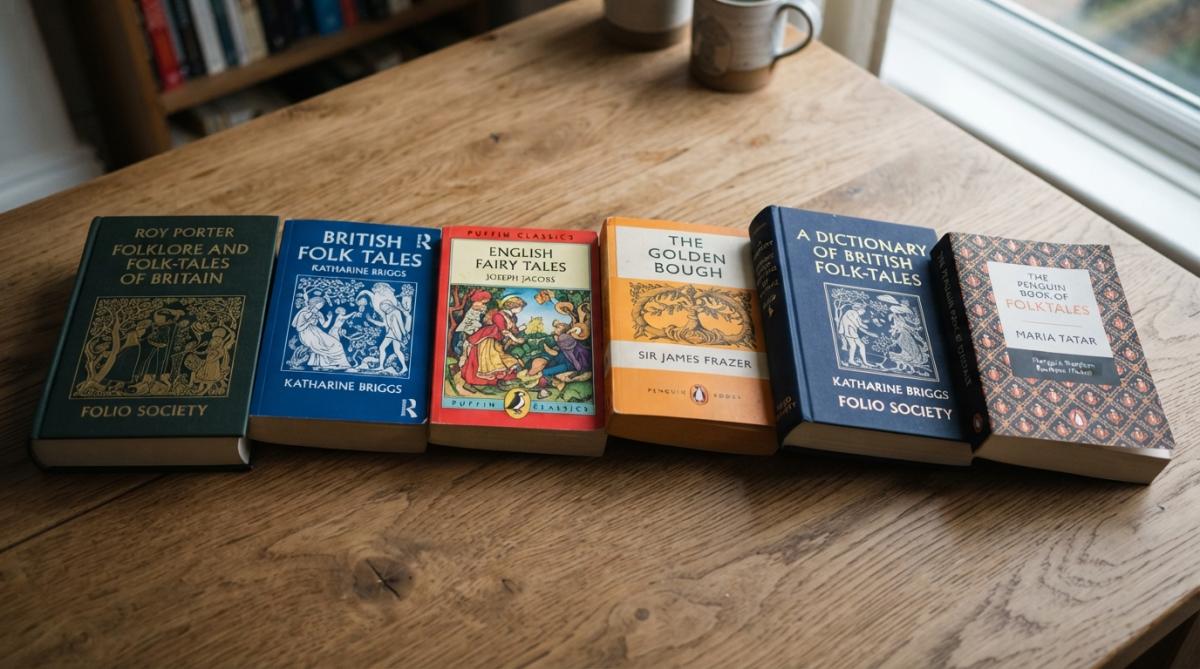
1. Pook Press: Vintage Illustrated Fairy Tales and Folk Tales
Pook Press solves the problem Dover ignores: most readers want the illustrations that made fairy tales magical, not plain reprints.
Pook Press specialises in bringing vintage illustrated editions back to life, reproductions of classic illustrated editions from the 19th and early 20th centuries when fairy tale illustration was genuinely an art form. Think Arthur Rackham, Edmund Dulac, and Kay Nielsen. Pook sources the best surviving copies of original editions using high-quality paper and binding that justifies keeping the book indefinitely. Books typically range from £10 to £25.
Best for: Collectors of classic illustrated editions, readers who want folklore presented as art, those seeking books that feel like heirlooms.
Pros:
- High-quality reproductions of genuinely beautiful original editions
- Carefully sourced from archival copies
- Respects the artistic value of vintage illustration
Cons:
- Primarily reprints with limited new scholarship
- Higher price point than Dover

2. The History Press: Best UK Folklore Publisher for Regional Stories
The History Press fills a gap Dover leaves completely open: contemporary, accessible books about British and Irish folklore rooted in specific regions.
Their folklore catalogue is carefully curated around local legends, regional ghost stories, and folk traditions tied to specific places. What The History Press does better than Dover is contextualisation, each book acknowledges that folklore is embedded in landscape, history, and community. Introductions explain why these stories matter to particular places. Pricing is competitive, paperbacks typically £9.99 to £14.99.
Best for: Readers interested in British and Irish folklore, local history enthusiasts, those seeking regional legends of specific UK areas.
Pros:
- Wide variety of accessible folklore titles rooted in specific regions
- Attractive cover designs with illustrations
- Authors frequently have direct connection to their subject regions
Cons:
- Focus primarily on British folklore; limited international coverage

3. Birlinn Ltd: Scottish Mythology and Regional Folklore Books UK
For anyone seriously interested in Scottish folklore, Birlinn Ltd is the publisher that matters. They're not reprinting old material; they're actively publishing contemporary work rooted in Scottish tradition.
Birlinn is an independent Scottish publisher with a dedicated folklore and mythology category. Their list includes fiction and non-fiction exploring Scottish myths, legends, and traditional tales, works by contemporary Scottish authors writing within folklore traditions and academic studies of specific Scottish legends. What matters is authenticity. Birlinn publishes Scottish folklore because they're Scottish and these traditions matter to their community. Pricing is reasonable, paperbacks typically £6.99 to £14.99.
Best for: Readers with keen interest in Scottish folklore, mythology, and cultural heritage; those seeking authentic regional perspectives on Scottish traditions.
Pros:
- Excellent source for authentic Scottish folklore
- Supports independent Scottish publishing
- Diverse range of storytelling, from academic to narrative
Cons:
- Strong regional focus limits appeal for broader international folklore

4. Troy Books: Independent Folklore Publishers UK with Esoteric Focus
Troy Books represents a completely different approach to folklore publishing, one Dover explicitly avoids. Based in Cornwall, they specialise in operative magic, ceremonial occultism, witchcraft, and regional folklore with explicit focus on magical and esoteric traditions.
Their catalogue includes serious scholarly work on historical witchcraft practices, ceremonial magic systems, and the folklore underlying magical traditions. Authors are often practitioners and researchers with genuine expertise. Folklore isn't purely narrative or historical, it's also a living practice. Witchcraft, folk magic, and ceremonial traditions are embedded in folklore but largely absent from mainstream publishing. Troy Books fills that gap, treating these traditions with scholarly respect. Pricing typically ranges from £15 to £30 per title.
Best for: Readers interested in esoteric, magical, and regional aspects of British folklore; those exploring witchcraft traditions and ceremonial magic within folklore contexts.
Pros:
- Specialised content not commonly found elsewhere
- Treats esoteric traditions with scholarly rigour
- Supports independent publishing with genuine expertise
Cons:
- Niche focus may not appeal to general folklore enthusiasts
5. Rymour Books: Scottish Folk Tradition and Academic Reprints
Rymour Books represents a newer model of independent Scottish publishing, bridging contemporary work and historical scholarship through strategic reprinting of significant texts.
Founded in 2020, Rymour Books focuses specifically on Scottish folk tradition, traditional songs, and folklore. The publisher operates two imprints: Rymour Books for contemporary works and Hog's Back Press for academic titles on Scottish folk tradition. This dual approach means you can find both modern explorations of Scottish folklore and carefully selected reprints of historically important academic texts that had gone out of print. What distinguishes Rymour from other Scottish publishers is the academic reprints component, they identify significant out-of-print scholarly works and bring them back into circulation.
Best for: Enthusiasts of Scottish folklore, traditional songs, and academic studies of Scottish cultural heritage; researchers seeking historical scholarship on folk traditions.
Pros:
- Dedicated to preserving and promoting Scottish folk traditions
- Offers both contemporary and historical perspectives
- Academic reprints make important scholarship accessible again
Cons:
- Highly specialised in Scottish folklore
- Relatively new publisher, so catalogue is still growing
6. Routledge: Academic Folklore Studies at Scale
For readers wanting serious scholarly engagement with folklore, Routledge represents the opposite end of the spectrum from Dover. They publish at academic depth with global perspective through multiple dedicated series including Routledge Studies in Folklore and Fairy Tales and Routledge Library Editions: Folklore.
Their catalogue includes research monographs, edited collections, and theoretical frameworks for understanding folklore across cultures. Authors are university-based scholars publishing original research. Books address folklore as a discipline, examining how traditions form, transmit, function in culture, and change. Routledge books typically cost £30 to £100+ per title and are written for academic audiences. If you're building a serious research collection or studying folklore formally, Routledge is essential.
Best for: Students, academics, and researchers requiring comprehensive and in-depth scholarly works on folklore and cultural studies.
Pros:
- Extensive catalogue of high-quality academic resources
- Global perspective on folklore traditions
- Original scholarship from established researchers
Cons:
- Books can be expensive
- Content often too specialised for casual readers
7. Cambridge University Press: Contemporary Folklore Research
Cambridge's Elements in Folklore series offers a middle ground between popular folklore collections and dense academic monographs. Each Element is a concise, peer-reviewed publication of around 30,000 words exploring specific folklore topics.
The series is edited by leading folklore scholars and covers diverse aspects: global and local traditions, ancient and modern practices, traditional and novel folklore forms. These are current research publications, not reprints, you're reading what contemporary folklore scholars are actively investigating. Pricing is significantly lower than traditional academic monographs, typically £15 to £25 per Element, making contemporary folklore scholarship accessible without requiring academic library subscriptions.
Best for: Academics, students, and informed readers looking for focused, up-to-date scholarly insights into specific folklore topics.
Pros:
- Concise and accessible scholarly content
- Covers broad range of contemporary and historical folklore subjects
- Affordable compared to traditional academic monographs
Cons:
- Narrow focus on specific topics rather than comprehensive surveys
8. Spiral Books: Independent UK Local Folklore and History
Spiral Books represents small-scale independent publishing done well. Established in 2001, they publish fiction and non-fiction with particular strength in local history and regional folklore of the UK.
Spiral publishes stories larger publishers ignore, local legends, regional folklore, community histories that matter intensely to people in those regions. They also collaborate with Country Books on reprinting out-of-print county history books, making archival material accessible again. Spiral welcomes submissions from authors, discovering new voices in local folklore and history. Pricing typically ranges from £8.99 to £17.50.
Best for: Readers interested in independent publishing, local history, and regional folklore of the UK; those seeking unique local folklore stories.
Pros:
- Supports independent authors and niche topics
- Good for discovering unique local folklore stories
- Accessible pricing for building collections
Cons:
- Smaller catalogue compared to larger publishers
9. The Folklore Society: Scholarly Resources and Institutional Authority
The Folklore Society operates differently from commercial publishers. As a learned society established in 1878, they function as both a publisher and research institution, maintaining an extensive library collection and publishing original scholarship.
Membership provides access to their journal Folklore, a peer-reviewed publication featuring contemporary research on folklore traditions. They also organise lectures, conferences, and events connecting members with active folklore scholars. The society maintains a substantial library of nearly 19,000 items at University College London, available to members.
Best for: Academics, researchers, and serious enthusiasts of folklore seeking in-depth scholarly resources and community engagement with folklore scholars.
Pros:
- Extensive and historically significant collection of folklore materials
- Reputable academic journal and publications
- Connects members with network of folklore scholars and enthusiasts
Cons:
- Primarily academic focus, less appealing to casual readers
10. Floris Books: Children's Folklore and Waldorf-Inspired Storytelling
Floris Books brings a specific educational philosophy to folklore publishing, rooted in Waldorf education principles. They specialise in beautifully illustrated children's folklore and fairy tale collections designed for developmental appropriateness and storytelling quality.
What distinguishes Floris from general children's publishers is their commitment to folklore as educational and spiritual material. Books are carefully illustrated with a distinctive aesthetic reflecting Waldorf principles. Stories are selected with attention to how children at different developmental stages engage with mythology and folklore. Pricing typically ranges from £8 to £16.
Best for: Parents and educators seeking beautifully illustrated children's folklore; those valuing Waldorf education principles or holistic childhood development approaches.
Pros:
- High-quality illustrations in children's folklore collections
- Careful attention to developmental appropriateness
- Beautiful presentation suitable for family libraries
Cons:
- Waldorf education focus may not suit all families
Which Dover Publications Alternative Should You Choose?
The right alternative depends entirely on what you're looking for. If you want folklore presented as visual art, Pook Press delivers what Dover never could. If you're interested in regional British folklore, The History Press offers depth and contextualisation Dover ignores. If Scottish traditions matter to you, Birlinn Ltd and Rymour Books represent authentic engagement with that heritage.
For serious research, Routledge and Cambridge University Press offer scholarly frameworks Dover can't match. For esoteric and magical traditions, Troy Books is essential. For children's folklore, Floris Books treats the material with care that mass-market publishers skip.
The common thread across all these alternatives is editorial intention. Each publisher cares about folklore in a way that matters to their publishing decisions. That care translates into books that feel chosen rather than catalogued, curated rather than licensed.
If you're building a serious folklore collection, you need publishers that respect both the tradition and the reader. At Robs Books, we understand that folklore fans want more than cheap reprints, they want storytelling that honours cultural heritage, original works that explore tradition authentically, and books worth keeping on a shelf indefinitely. Our collection includes folklore titles alongside British cosy mysteries and practical cookbooks, all selected for genuine quality rather than volume. Explore what's available and discover folklore publishing that actually respects your interest in the material.
Frequently Asked Questions
What are the best UK folklore publishers as alternatives to Dover Publications?
The History Press, Birlinn Ltd, and Spiral Books are excellent UK folklore publishers offering regional and national traditions. The History Press specialises in British and Irish folklore with titles ranging from £9.99 to £14.99. Birlinn focuses on Scottish traditions and mythology, while Spiral Books emphasises local history and independent publishing. Each offers distinct regional perspectives that Dover doesn't prioritise.
Are there independent folklore publishers UK that offer better quality than Dover?
Yes. Troy Books (Cornwall-based, specialising in esoteric and regional folklore), Rymour Books (Scottish folk tradition and reprints), and Robs Books (original folklore and British mysteries) are independent alternatives. These publishers often provide more curated, niche collections and support independent authors. Quality varies by title, but many offer scholarly rigour or artistic presentation Dover reprints lack.
What's the difference between academic and popular folklore alternatives?
Academic alternatives like Routledge and Cambridge University Press offer peer-reviewed scholarship (£15-£100+), ideal for researchers and serious students. Popular alternatives like Pook Press and The History Press focus on accessible storytelling and illustration (£10-£25), better for casual readers. Choose academic sources for theoretical frameworks; popular publishers for narrative enjoyment and cultural heritage exploration.
Do folklore societies UK publications offer alternatives to Dover?
The Folklore Society (established 1878) publishes the journal 'Folklore' and curated books through membership. They maintain a 19,000-item library at UCL and host academic events. Membership provides access to scholarly resources and a network of folklore scholars. This is ideal for serious enthusiasts and academics seeking authoritative, peer-reviewed folklore content and community engagement.
Which Dover Publications alternatives offer e-books or digital access?
Cambridge University Press Elements in Folklore offers e-book and print options (£15-£25). Routledge provides digital access to many titles. The Folklore Society offers digital membership resources. However, many independent UK publishers (Troy Books, Birlinn, Spiral Books) focus primarily on print. Check individual publisher websites for e-book availability, as digital options vary significantly across alternatives.
This article was written using GrandRanker
0 comments