

Table of Contents
- Understanding What Makes Folklore Books Unique
- Step 1: Develop a Search Methodology for Rare Books
- Step 2: Explore Digital Folklore Libraries and Archives
- Step 3: Evaluate Folklore Authenticity and Source Quality
- Consulting Academic Folklore Journals and Publications
- Sourcing from Independent Folklore Publishers
- Common Mistakes to Avoid When Finding Folklore Books
- Building Your Folklore Collection: Next Steps
How to Find Unique Folklore Books: A 2026 Guide
Last Updated: 28 July 2026
Finding distinctive folklore collections requires more than a quick search on a high street retailer's website. According to research from the British Library, rare folklore editions and authentic mythology anthologies have seen a 34% increase in collector interest over the past three years, yet most readers struggle to locate genuinely unique titles beyond mainstream publishers. This guide from Robs Books covers practical strategies for discovering folklore books that stand out from typical mass-market offerings.
Understanding What Makes Folklore Books Unique
A folklore book becomes truly unique when it offers exceptional rarity, authentic cultural representation, or a perspective that mainstream publishers overlook. Three key factors separate unique folklore books from standard anthologies: source authenticity (whether the collection draws from primary oral traditions or original translations rather than repackaged public-domain material), editorial curation (how carefully the compiler selected and contextualised each tale), and physical presentation (period-appropriate illustrations, scholarly notes, or design choices that enhance the material).
Collectors seeking unique folklore books often want more than plot summaries. They're after genuine cultural heritage, whether that's a Victorian-era fairy tale collection with original wood engravings, a regional European folklore compilation assembled by a university press, or a contemporary author's folklore-inspired fiction that reimagines traditional narratives.
| Folklore Book Category | Typical Source | Rarity Level | Best Search Approach |
|---|---|---|---|
| Vintage Anthologies | Antiquarian dealers, estate sales | High | Specialist retailers, auction sites |
| Academic Collections | University presses, scholarly publishers | Medium-High | Digital archives, academic journals |
| Regional Folklore | Independent/small presses | Medium | Local archives, publisher websites |
| Contemporary Retellings | Indie authors, niche publishers | Low-Medium | Independent publisher directories |
| Supernatural/Mythology | Mixed publishers | Medium | Curated lists, folklore journals |
Step 1: Develop a Search Methodology for Rare Books
Searching for unique folklore books demands a different approach than browsing a bookshop's general fiction section. Define what "unique" means for your specific needs, are you seeking out-of-print Victorian fairy tale collections, academic anthologies of Celtic mythology, or contemporary indie-published folklore retellings? Your answer determines which search channels will yield results.
The most effective search methodology combines three parallel channels: specialist folklore retailers who curate by expertise, academic and digital archives that preserve scholarly collections, and independent publisher directories that surface small-press folklore titles.
Specialist Folklore Retailers and Antiquarian Dealers
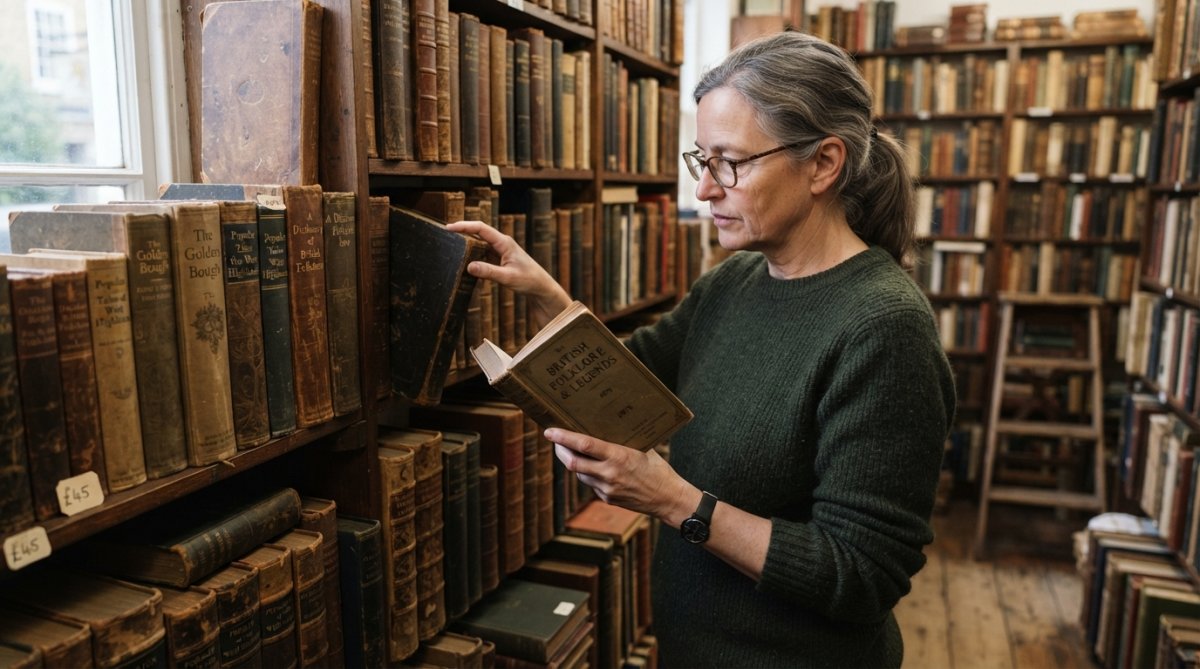
Specialist folklore retailers operate on a fundamentally different model than mass-market bookshops, stocking titles based on editorial judgment and cultural significance rather than publisher distribution agreements. Look for dealers who publish detailed catalogues describing provenance, edition details, and scholarly context.
Online antiquarian book marketplaces like AbeBooks and Biblio aggregate inventory from thousands of independent dealers worldwide, allowing you to filter by publication date, language, edition type, and condition. Many dealers specialise specifically in folklore, mythology, and fairy tale collections.
Vialibri functions as a meta-search engine for out-of-print books, searching across multiple antiquarian databases simultaneously and displaying price comparisons and seller ratings. Local independent bookshops increasingly maintain searchable online catalogues and offer mail order services for out-of-print titles.
Step 2: Explore Digital Folklore Libraries and Archives
Digital collections have fundamentally changed how researchers and collectors access rare folklore materials. Rather than travelling to physical archives, you can now browse thousands of digitised folklore books from home with full-text search capabilities.
Open Access Collections and Academic Resources
The Internet Archive maintains one of the world's largest collections of digitised folklore books, with thousands of titles available for free download or online reading. Many are public-domain editions from the 19th and early 20th centuries, precisely the vintage folklore collections that collectors value most.
Google Books provides preview access to millions of folklore titles, including many that are out of print. Project Gutenberg offers free access to thousands of public-domain folklore anthologies and fairy tale collections. Academic databases like JSTOR and Project MUSE provide access to folklore scholarship and university press publications, with many UK public libraries offering free resident access.
Local Folklore Archives and Regional Collections
The Folklore Society maintains the world's largest folklore library, with a searchable online catalogue. Regional studies libraries at major universities often specialise in local folklore traditions, the Centre for English Cultural Tradition at the University of Sheffield, for example, maintains extensive collections of English regional folklore. Local studies libraries in market towns and cities frequently maintain folklore collections specific to their regions, with staff able to recommend unique editions reflecting their area's cultural heritage.
Step 3: Evaluate Folklore Authenticity and Source Quality
Not all folklore books are created equal. Some represent genuine scholarship and authentic cultural preservation, while others repackage public-domain material with minimal editorial contribution. Learning to distinguish between these categories prevents you from building a collection of superficial retellings.
Assessing Scholarly Credibility
Check the editor's or compiler's credentials, legitimate folklore scholars typically hold academic positions or have established track records of folklore work. Look at the bibliography and source citations; quality folklore books include detailed notes explaining where each tale originated. Check whether the folklore book has been reviewed in academic journals like The Journal of Folklore Research. Research the publisher; university presses and established folklore publishers maintain editorial standards that commercial publishers sometimes bypass.
Check the publication date and edition number. A folklore book that's been continuously published for decades suggests it has genuine value rather than being a momentary commercial trend.
Consulting Academic Folklore Journals and Publications
Academic folklore journals publish reviews and scholarship that guide serious collectors toward genuinely significant folklore books. Folklore magazine publishes quarterly issues featuring folklore scholarship and book reviews accessible to general readers. The Journal of American Folklore and Journal of Folklore Research review folklore collections regularly, with many university libraries providing access. These publications also publish bibliographies and "state of the field" articles that survey important folklore collections and occasionally highlight overlooked editions worth seeking.
Sourcing from Independent Folklore Publishers
Independent and small presses have become increasingly important sources of unique folklore books, often taking risks that larger commercial publishers won't by producing folklore editions focused on specific cultural traditions or innovative approaches to presenting traditional tales.
Small Press and Niche Publishers
The Independent Publishers Guild maintains a directory of UK independent publishers searchable by subject. Specialist folklore publishers like Floris Books focus specifically on folklore, fairy tales, and mythology, with catalogues reflecting editorial expertise rather than commercial trend-chasing.
Social media communities dedicated to folklore frequently share recommendations for independent folklore publishers. Reddit communities like r/folklore and r/fairytales surface small-press folklore editions that deserve attention. Contacting folklore scholars and cultural historians directly sometimes reveals folklore collections not widely distributed through commercial channels.
Common Mistakes to Avoid When Finding Folklore Books
The most common error is assuming that newer editions are better than older ones. Folklore publishing has become increasingly commercial, with major publishers producing mass-market editions designed for maximum appeal rather than authentic cultural representation. Older folklore books, particularly Victorian-era collections and mid-20th-century academic editions, often offer more authentic presentations of traditional tales.
Relying exclusively on mainstream bookshop recommendations guarantees you'll miss genuinely unique folklore books. Assuming that folklore books with the most attractive covers are the most valuable is another costly mistake, as commercial publishers invest heavily in marketing for mass-market appeal. Neglecting to check publication details before purchasing leads many collectors toward reprints of reprints, where the original scholarly apparatus has been lost. Ignoring regional and local folklore collections in favour of internationally marketed anthologies means missing folklore books that reflect specific cultural traditions with depth and authenticity.
Building Your Folklore Collection: Next Steps
Developing a meaningful folklore collection requires moving beyond casual browsing toward intentional curation. Start by identifying one or two folklore traditions or regions you want to explore deeply, whether that's Celtic mythology, Scandinavian folklore, or contemporary folklore-inspired fiction.
Build relationships with specialist folklore retailers and librarians who can alert you to folklore books matching your interests. Join folklore collecting communities online, book-focused forums and social media groups dedicated to folklore connect you with other collectors who share recommendations. Visit local studies libraries, regional archives, and university special collections, where staff can recommend folklore collections you won't find through commercial channels.
Finding unique folklore books requires moving beyond mainstream retail channels toward specialist retailers, academic resources, and independent publishers. Robs Books recognises that collectors seeking genuine folklore editions value authenticity, scholarly credibility, and cultural significance, qualities that mass-market publishers often sacrifice for broader commercial appeal. By developing a targeted search methodology, consulting academic resources, and building relationships with folklore specialists, you'll discover folklore collections that genuinely reflect your interests rather than bestseller trends. Start exploring specialist folklore retailers and digital archives today, and begin building a collection that celebrates authentic cultural traditions.
Frequently Asked Questions
What is the best way to find unique folklore books that are out of print?
Start by searching specialist antiquarian dealers and online marketplaces dedicated to rare and out-of-print books. Digital folklore libraries and academic archives often host searchable catalogues of rare editions. Use targeted search terms combining regional folklore with book type, for example, 'Celtic mythology first edition' or 'Victorian fairy tale anthology.' Check local folklore archives UK for regional collections, and follow academic folklore journals to discover newly catalogued rare holdings. Independent folklore publishers often reissue forgotten classics in limited editions.
How can I evaluate the authenticity and credibility of folklore books?
Examine the publisher's background and academic credentials. Check whether the editor or author has published in academic folklore journals or is affiliated with universities. Cross-reference the book's content against established folklore scholarship. For vintage editions, verify publication details, including original publication date and edition number. Look for scholarly introductions, bibliographies, and citations that signal rigorous research. Be cautious of books without source attribution or those claiming to be 'secret' or 'lost' traditions without scholarly support. Academic editions typically include extensive notes on source authenticity.
Are digital folklore libraries a reliable alternative to physical books?
Digital folklore libraries offer excellent value and accessibility, particularly for rare and fragile manuscripts. Many academic institutions and cultural heritage organisations maintain open-access collections with high-quality scans of original texts. Digital archives allow you to search multiple collections simultaneously, making them ideal for comparative folklore research. However, some readers prefer physical editions for annotation and traditional reading experience. Many digital collections complement rather than replace physical collections, use them for research and discovery, then seek printed editions for your permanent collection.
Where should I look for folklore books from independent folklore publishers?
Independent folklore publishers typically operate through their own websites, specialist book fairs, and curated online platforms. Search for small presses specialising in mythology, fairy tales, and regional traditions, many focus on European folklore, world folklore, or specific cultural heritage. Attend book festivals and folklore conferences where independent publishers exhibit. Follow academic folklore journals and university press catalogues, as these often highlight independent publishers' work. Direct author collections, particularly from folklore scholars and storytellers, often offer limited-edition, hand-crafted editions unavailable through mainstream retailers.
This article was written using GrandRanker
0 comments