

Table of Contents
- Are Independent Books Worth the Extra Cost? Understanding the Pricing Question
- What You're Actually Paying For: Breaking Down the Book Dollar
- Why Are Books Cheaper on Amazon? The Economics Behind Discounting
- Benefits of Shopping at Independent Bookshops Beyond the Price Tag
- Curated Book Recommendations from Indie Booksellers: A Different Experience
- The Environmental and Social Case for Independent Publishers
- The Third Place: Books as Community Infrastructure
- Profit Margins, Operational Costs, and Sustainability
Are Independent Books Worth the Extra Cost? A 2026 Guide
Last Updated: August 4, 2026
The question of whether independent books are worth the extra cost sits at the heart of a broader conversation about how we value reading, community, and cultural diversity. At Robs Books, we've spent years helping readers navigate this exact tension between convenience and connection, between the lowest price and the most meaningful experience. What you're actually paying for extends far beyond the paper and ink.
Are Independent Books Worth the Extra Cost? Understanding the Pricing Question
When you buy a book from an independent publisher or independent bookshop, you're participating in an ecosystem that operates on fundamentally different principles than corporate retail. The price difference reflects real structural differences in how books move through supply chains, how they're discovered, and what happens to revenue once a sale is made.
Independent bookshops and publishers often stock titles that larger retailers won't touch because the economics don't work at massive scale. This means you have access to voices, perspectives, and stories that wouldn't exist in a world dominated by loss-leader pricing.
According to Bookshop.org's analysis of independent retail economics, independent booksellers spend significantly more on staff training and community engagement than chain retailers, which translates directly into better recommendations and a more informed shopping experience.
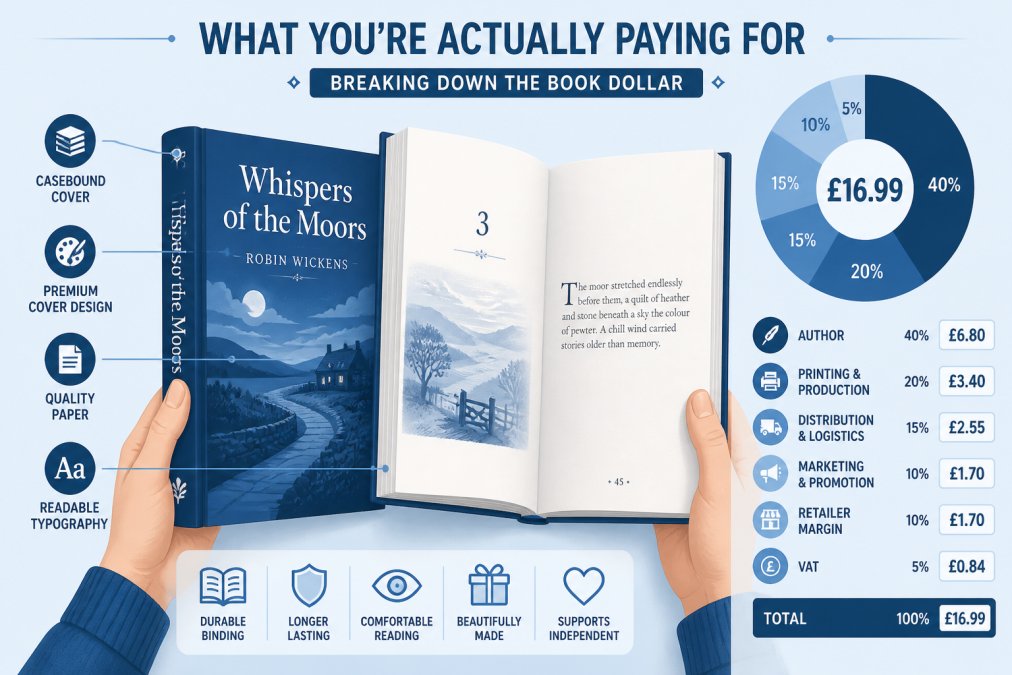
What You're Actually Paying For: Breaking Down the Book Dollar
Understanding where your money goes when you buy a book is essential to answering whether independent books are worth the extra cost.
Publisher margins and production standards
A traditionally published book typically generates roughly 50% of its cover price in wholesale revenue to the publisher after the retailer takes their margin. From that 50%, the publisher must cover editorial costs, cover design, typesetting, printing, distribution, marketing, and author royalties.
Independent publishers often invest more heavily in editorial quality because they must compete on quality and uniqueness rather than price. This means multiple rounds of editing, professional cover design, and careful attention to production standards. Independent publishers typically print smaller runs, which means higher per-unit production costs, one genuine reason independent books cost more at the point of sale.
Editorial quality and curation differences
The editorial process at independent publishers often involves more subjective decision-making. An independent publisher might reject a commercially viable manuscript because it doesn't align with their vision, or champion a book that a larger publisher would deem too niche. This curatorial approach creates different value.
When you buy an independent book, you're often buying something that passed through a more rigorous editorial filter based on genuine editorial conviction rather than market testing.
Why Are Books Cheaper on Amazon? The Economics Behind Discounting
The price gap between independent bookshops and online retailers exists because of fundamental differences in how these businesses operate.
Economies of scale and wholesale discounts
Amazon negotiates aggressively with publishers for wholesale discounts far deeper than independent bookshops can secure. A large retailer buying millions of copies annually has leverage that a single independent bookshop cannot match.
Amazon's logistics infrastructure handles massive volume across countless product categories. Books are often loss leaders, sold at or below cost to drive customer acquisition and increase overall basket value. Amazon's operational costs per book are substantially lower because they don't employ staff to hand-sell books, host author events, or maintain physical retail space.
Loss-leader pricing strategies
Large retailers use books as loss leaders because a reader who comes to buy a discounted book is likely to browse and purchase other items. Independent bookshops cannot operate on this model, every book must contribute to business viability. The extra cost isn't arbitrary markup; it's the price of a business model that doesn't rely on cross-subsidisation from other product categories.
Benefits of Shopping at Independent Bookshops Beyond the Price Tag
When you evaluate whether independent books are worth the extra cost, you need to weigh what else you're getting.
Curated selection and discovery
Independent bookshops stock books that the bookseller believes in, creating a curated environment rather than an algorithmic one. A bookseller who has read hundreds of books in a particular genre can make connections and suggestions that an algorithm cannot.
Research from the Booksellers Association on independent retail value found that customers of independent bookshops discover new authors at significantly higher rates than online shoppers, with higher satisfaction in their purchases. This discovery value is real and worth something.
Community and social capital
Independent bookshops function as gathering spaces. They host author events, book clubs, writing workshops, and community conversations. When you shop there, you're participating in a cultural institution that serves functions beyond retail.
This community aspect creates social capital, networks of connection and shared culture that have real value. Readers find their people. Writers find their audience. These connections don't happen on Amazon.
Curated Book Recommendations from Indie Booksellers: A Different Experience
At Robs Books, we understand that the experience of finding your next great read matters. Our collection of original works by Robin Wickens, from British cosy mysteries to folklore and children's stories, reflects careful editorial choices rather than algorithmic popularity.
The difference between discovering a book through an indie bookseller's recommendation versus an algorithm is the difference between "people like you also bought this" and "I think you'll genuinely love this because of X, Y, and Z." The second approach requires knowledge, taste, and actual engagement with the reader.
The Environmental and Social Case for Independent Publishers
Beyond economics and community, there's an environmental and cultural argument for supporting independent publishing.
Supply chain transparency and local impact
Independent publishers typically have shorter, more transparent supply chains. They work with printers in their region and the money they earn stays in their local economy. Large retailers optimise for cost efficiency, which often means consolidating distribution into massive warehouses, creating longer shipping distances and higher cumulative carbon footprint.
Supporting bibliodiversity and new voices
Independent publishers are responsible for publishing the vast majority of books in niche categories, literary fiction from underrepresented authors, translated works, poetry, and specialist non-fiction. When you buy from independent publishers, you're actively supporting bibliodiversity, the principle that a healthy literary ecosystem requires diversity of publishers, not just diversity of authors.
The Third Place: Books as Community Infrastructure
Sociologists use the term "third place" to describe spaces that are neither home nor work but serve essential social functions. Independent bookshops are quintessential third places where strangers become neighbours and culture happens.
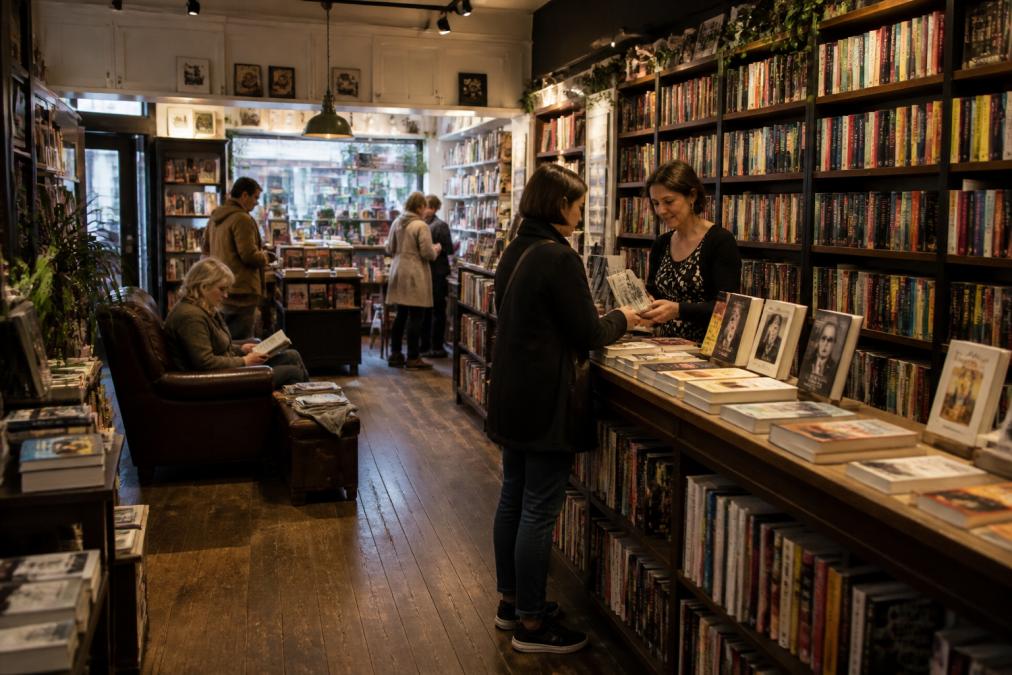
When you pay more for a book at an independent bookshop, you're partially paying for access to that third place. Research from the American Booksellers Association on community impact shows that independent bookshops generate significantly more local economic activity and community engagement per square foot than chain retailers.
Profit Margins, Operational Costs, and Sustainability
Understanding why independent books cost more requires looking at the financial realities of independent retail.
How independent retailers stay viable
An independent bookshop's profit margin on each book sale must cover rent, utilities, staff salaries, insurance, marketing, technology systems, and slow-moving inventory that ties up capital. A book sitting on the shelf for six months generates zero revenue during that time but still costs money to store and display.
Large retailers operate on much thinner margins per book because they spread fixed costs across vastly higher volume and compensate through other revenue streams. Independent bookshops cannot.
What happens when prices drop too far
When independent bookshops are forced to compete on price with loss-leader retailers, they cannot win. What happens instead is that independent bookshops close, and with them goes the curation, community space, and local economic activity they generated. This creates a vicious cycle affecting the entire publishing ecosystem.
The question of whether independent books are worth the extra cost is ultimately a question about what kind of literary ecosystem you want to live in. If you want a world where readers can discover new voices, where books are curated by people with taste and knowledge, and where reading is a community practice, then the extra cost is an investment in infrastructure that matters.
| Aspect | Independent Bookshops | Large Online Retailers |
|---|---|---|
| Curation approach | Human editorial judgment | Algorithmic recommendations |
| Community functions | Author events, book clubs, gathering space | None |
| Supply chain transparency | High (local/regional) | Low (global consolidation) |
| Staff expertise | Deep genre knowledge | Limited product knowledge |
| Discovery experience | Serendipity and expertise | Popularity-based suggestions |
| Local economic impact | Direct (money stays local) | Minimal (centralised distribution) |
| Environmental footprint | Lower (shorter supply chains) | Higher (consolidated warehousing) |
The books you choose to buy and where you buy them shapes the publishing landscape for everyone. When you shop at independent bookshops or buy directly from independent publishers, you're supporting a business model that prioritises discovery, community, and cultural diversity. At Robs Books, we believe that original storytelling, whether it's British cosy mysteries, folklore, children's stories, or creative colouring books, deserves to exist in a world where readers can find it through genuine curation rather than algorithmic chance. Explore our collection of carefully selected works and experience the difference that editorial conviction makes.
Frequently Asked Questions
Are independent books actually more expensive, or does it just feel that way?
Independent books often carry higher retail prices than corporate discounted copies, but the difference reflects genuine cost factors: smaller print runs mean higher per-unit production costs, independent publishers typically invest more in editorial quality and cover design, and they lack the economies of scale that allow giants like Amazon to absorb margin losses. The premium exists for structural reasons, not markup alone. Whether that premium justifies the purchase depends on whether you value those quality markers and the supply chain transparency that comes with independent publishing.
What are the main benefits of shopping at independent bookshops compared to online retailers?
Independent bookshops offer curated recommendations from knowledgeable staff rather than algorithms, creating genuine discovery experiences tailored to your interests. They function as community hubs where readers connect with authors and other book lovers. Your purchase directly supports local employment and contributes to local tax revenue. Independent retailers typically stock niche and literary titles that corporate chains deprioritise. Many readers report that the browsing experience, personal service, and sense of contributing to a local business outweigh the price difference.
How do independent publishers ensure their books are professionally edited and designed?
Reputable independent publishers, including original authors publishing through established indie channels, maintain professional editorial standards comparable to traditional publishing houses. They hire freelance editors, cover designers, and typesetters to ensure production quality. The key difference is that independent publishers often invest more heavily in these areas per title because they cannot rely on volume discounts. When evaluating an independent book, check for professional cover design, clean interior layout, and evidence of professional editing. Established independent publishers and author-led imprints typically display these markers clearly.
How does buying from independent booksellers impact the local economy?
Independent bookshops create local employment, contribute to local tax revenue, and keep money circulating within the community rather than funnelling it to distant corporate headquarters. Studies consistently show that independent retailers generate higher local economic multipliers than chain stores. When you buy from an independent bookshop or publisher, a significantly larger portion of your spending stays in the local economy. Additionally, independent retailers often source from local suppliers and support other small businesses, creating a network effect that strengthens the entire community infrastructure.
This article was written using GrandRanker
0 comments