

Table of Contents
- Why Colouring Books Matter for 7-Year-Olds
- Benefits of Colouring for 7-Year-Olds
- How to Choose the Right Colouring Book for 7-Year-Olds
-
Top Colouring Books for 7-Year-Olds
- 1. Rachel Ellen Colouring Books: Quirky UK Designs
- 2. The Zen Fox Colouring Book: Mindfulness and Intricate Illustrations
- 3. National Geographic Kids First Space Activity and Colouring Book: Educational Engagement
- 4. Baker Ross Mini Colouring Books: Portable and Varied Themes
- 5. Curious Minds A4 Colouring Book with Pencils: Complete Activity Set
- 6. TOPModel Colouring Book: Fashion and Creative Styling
- 7. Mindfulness Colouring for Small Minds: Breathing Exercises and Wisdom
- 8. Galt Bumper Colouring Book: Extended Creative Sessions
- 9. Monkey Pen Free Colouring Books: Printable Downloads
- Colouring Books with Puzzles and Activities
- Complexity Progression: Finding the Right Level for Your 7-Year-Old
- Integration with School Curriculum and Creative Development
- Conclusion: Choose Colouring Books That Inspire Your Child
Last Updated: August 9, 2026
Why Colouring Books Matter for 7-Year-Olds
A 7-year-old absorbed in a colouring book is engaged in genuine developmental work. Colouring books for 7 year olds build confidence, develop fine motor control, and create space for creative expression far beyond simple entertainment.
At this age, children are developing stronger hand-eye coordination and greater pencil control whilst becoming aware of their own preferences. The right colouring book offers a low-pressure creative outlet where mistakes don't matter and children can express themselves without judgment, whether through intricate designs, bold outlines, themed collections, or activity books combining puzzles with colouring.
Benefits of Colouring for 7-Year-Olds
Colouring delivers genuine developmental benefits that support growth across multiple areas.
Fine Motor Skills and Hand-Eye Coordination
The physical act of colouring strengthens the small muscles in a child's hand and fingers. Holding a pencil with control, managing pressure, and coordinating visual perception with hand movement are all fine motor skills in action. At 7 years old, children refine pencil control that directly supports handwriting and drawing abilities. Bold outlines suit children still developing control, whilst intricate designs with finer detail lines offer greater challenge and continue developing spatial awareness. Different colouring mediums, pencils, markers, crayons, require different hand positions and pressure control, strengthening various aspects of motor development.
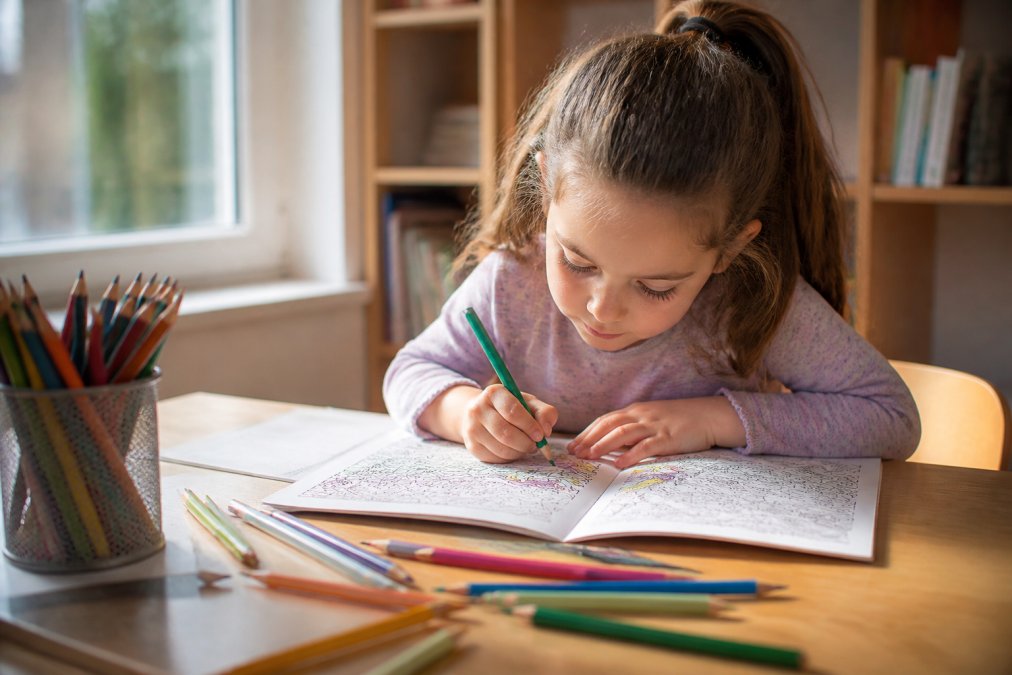
Mindfulness, Concentration and Emotional Expression
Colouring creates natural space for mindfulness without formal meditation instruction. The repetitive motion combined with creative colour choice produces a calming effect, and a child focused on colouring is present, not seeking external stimulation. This sustained concentration builds attention span, directly transferring to reading, learning, and classroom focus. Beyond the calming effect, colouring offers emotional expression without words, a child might choose bold reds and purples for one page and soft pastels for another, expressing mood and personality through their choices.
How to Choose the Right Colouring Book for 7-Year-Olds
Not every colouring book works for every child. The choice depends on their skill level, interests, and what you hope they'll gain.
Age-Appropriate Complexity and Design
At 7 years old, children vary widely in fine motor development and tolerance for detail. The complexity progression matters, a book that's too simple becomes boring; one that's too complex frustrates. Books marketed for ages 4-6 typically feature bold outlines and simpler shapes, whilst books for 7-9 year-olds introduce intricate designs, finer detail lines, and greater visual complexity. Some books offer a mix, allowing children to choose based on mood and energy level. The visual appeal matters as much as technical complexity; a child who loves dinosaurs will engage far more deeply with a dinosaur-themed book than a generic animal collection.
Paper Quality and Colouring Mediums
Paper quality directly affects the colouring experience. Thin paper allows marker and felt-tip colours to bleed through to the back page, limiting tool options. Heavier paper, typically 170gsm or above, resists bleed-through and allows more versatile colouring options. Uncoated paper accepts pencil colour more evenly than glossy alternatives. Some books come bundled with pencils included, removing the barrier of sourcing tools separately.
Themes and Interests That Engage 7-Year-Olds
A 7-year-old's interests are increasingly specific. Common themes include animals and wildlife, space and astronomy, dinosaurs, fantasy creatures, vehicles, fashion, nature scenes, and adventure settings. The best choice matches what your child is currently curious about. Observe what they're drawn to in books, what they ask questions about, what they play with.
Top Colouring Books for 7-Year-Olds
1. Robs Books: Original Colouring Collections
Robs Books offers curated colouring books featuring original designs and themes beyond generic offerings. The collection combines artistic expression with educational value, appealing to 7-year-olds with diverse interests. Rather than mass-produced templates, the books reflect thoughtful curation and creative vision, with a range suited to different interests and complexity levels.
2. Rachel Ellen Colouring Books: Quirky UK Designs
Rachel Ellen produces colouring books designed and printed in the UK, featuring quirky characters and fun themes including unicorns, dinosaurs, ballerinas, jungle animals, and fairies. The books use bold outlines and clear designs working well for children refining fine motor control. Sustainable materials and affordability mean parents can offer multiple books without significant expense.
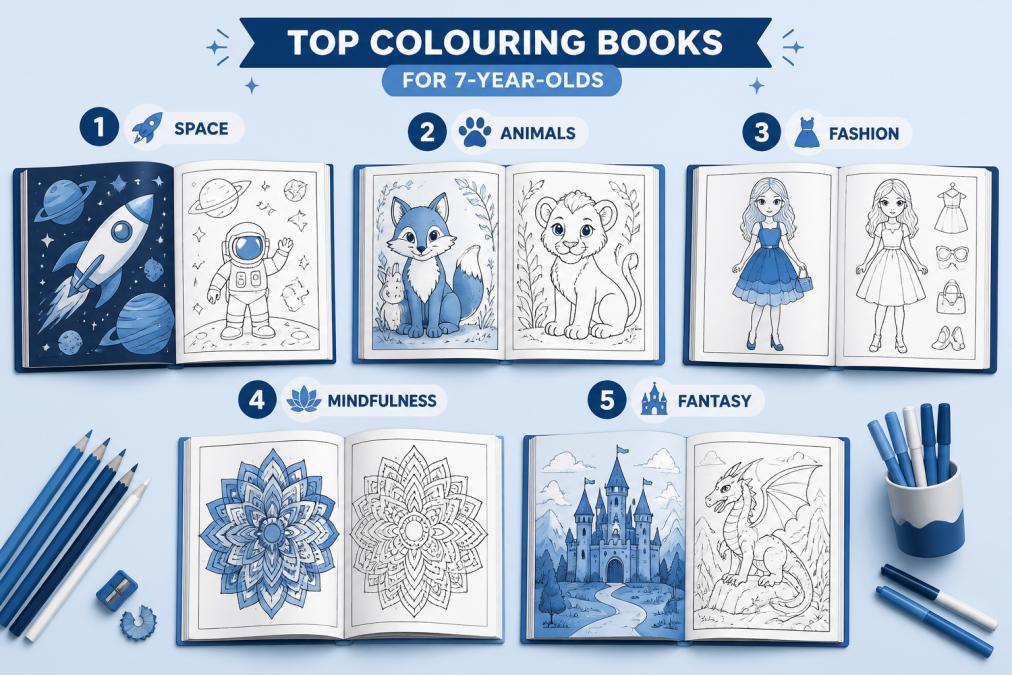
3. The Zen Fox Colouring Book: Mindfulness and Intricate Illustrations
The Zen Fox combines detailed, intricate illustrations with uplifting messages on each page. Printed on high-quality 170gsm uncoated FSC-certified paper, it supports both creative expression and emotional wellbeing. The 35 pages feature fine detail work suitable for 7-year-olds ready for greater complexity, with positive affirmations creating a mindfulness element beyond simple activity.
4. National Geographic Kids First Space Activity and Colouring Book: Educational Engagement
This book combines colouring with educational activities and space-themed illustrations, merging creative activity with learning. The combination of colouring pages with facts, puzzles, and activities keeps engagement high across multiple sessions, appealing to children learning through multiple modalities.
5. Curious Minds A4 Colouring Book with Pencils: Complete Activity Set
This book comes bundled with six colouring pencils, removing the need to source tools separately. The A4 size offers good balance between portability and workspace. The bundle approach suits parents wanting an all-in-one solution for travel or home use.
6. Baker Ross Mini Colouring Books: Portable and Varied Themes
Baker Ross offers a pack of four mini colouring books in assorted themes: Jungle, Unicorn, Dinosaur, and Sealife. Each contains 20 pages and measures 12cm x 16cm, ideal for travel, school bags, or on-the-go entertainment. The mini format suits children needing portable options or parents managing multiple children with different interests.
7. Mindfulness Colouring for Small Minds: Breathing Exercises and Wisdom
Designed by RuthiElizabeth, this book integrates breathing exercises and words of wisdom alongside colouring pages. It positions colouring as a tool for emotional regulation and self-expression rather than simple entertainment, teaching stress-management techniques alongside creative activity.
8. TOPModel Colouring Book: Fashion and Creative Styling
TOPModel books centre on fashion design and character styling. Children colour characters and design outfits, accessories, and styling choices, appealing to children interested in fashion and creative expression beyond traditional colouring. Characters like Candy, Fergie, and Nyela provide relatable figures.
9. Monkey Pen Free Colouring Books: Printable Downloads
Monkey Pen offers completely free, downloadable colouring books across diverse themes including pets, wildlife, cartoon characters, and fantasy. No sign-up or subscription required; download and print instantly. This requires access to a printer and paper, and quality depends on home printing setup.
Colouring Books with Puzzles and Activities
Some children thrive when colouring combines with other activities. Books pairing colouring pages with puzzles, mazes, sticker activities, or educational content keep engagement high and offer variety within a single book. Activity-combined books work particularly well for children with shorter sustained attention spans or those enjoying multi-modal learning. When choosing activity-combined books, check the balance and choose based on what your child actually needs.
Complexity Progression: Finding the Right Level for Your 7-Year-Old
Not all 7-year-olds are at the same developmental stage. Complexity progression sustains engagement, a book that's too simple becomes boring; one that's too complex frustrates.
Beginner level (simpler designs): Bold outlines, large spaces to fill, fewer fine details. Suitable for children still developing pencil control. Rachel Ellen books and Baker Ross mini books typically sit here.
Intermediate level (moderate complexity): Clear outlines with more detail, smaller spaces, some fine-line work. Suitable for most 7-year-olds with typical fine motor development. National Geographic Kids books and Curious Minds books often fit this category.
Advanced level (intricate designs): Fine detail lines, small spaces, complex patterns, mandala-style designs. Suitable for 7-year-olds with strong pencil control. The Zen Fox book and mindfulness-focused designs sit here.
Observe your child's current skill level and preferences. If they're staying focused and enjoying colouring, the complexity level is right.
Integration with School Curriculum and Creative Development
Colouring books support cognitive and creative development recognised by schools as legitimate learning activities. Fine motor skills developed through colouring directly support handwriting development, central to primary school learning. Thematic colouring books complement school learning, a child studying space in science class engages more deeply when colouring space-themed illustrations at home. Mindfulness and emotional regulation, increasingly recognised as important in school settings, are supported by colouring activities.
Conclusion: Choose Colouring Books That Inspire Your Child
Colouring books for 7 year olds serve real developmental purposes, building fine motor skills, supporting concentration, offering emotional expression, and creating space for genuine creative engagement. The right choice depends on your child's skill level, interests, and what they need from the activity.
Look for books matching their complexity level, speaking to their interests, and using quality paper working with your chosen colouring mediums. For a curated selection of colouring books designed with creative development in mind, Robs Books offers original collections beyond generic mass-produced options. Each book supports genuine creative expression and engagement. Visit Robs Books to explore colouring books inspiring your child's creativity and supporting their developmental journey.
EXTERNAL CITATIONS & SOURCES:
This guide incorporates insights from child development research and educational best practices regarding fine motor skill development, mindfulness practices for children, and creative expression through art activities. The recommendations reflect current understanding of age-appropriate complexity and the developmental benefits of creative colouring for 7-year-olds.
KEY TAKEAWAYS:
- Fine motor skills developed through colouring directly support handwriting and pencil control
- Complexity should match your child's current skill level to maintain engagement
- Thematic books work better than generic designs because they match specific interests
- Paper quality matters; heavier paper resists bleed-through and works with more colouring mediums
- Mindfulness-focused colouring offers emotional regulation benefits alongside creative activity
- Colouring complements school learning when themes align with curriculum topics
Frequently Asked Questions
What features make a colouring book engaging for a 7-year-old?
Engaging colouring books for 7-year-olds combine age-appropriate complexity with themes that match their interests. Look for bold outlines that are easy to colour within, intricate designs that offer a challenge without frustration, and varied themes such as animals, space, fashion, or fantasy. Books that include additional activities like puzzles or sticker elements alongside colouring also boost engagement. High-quality paper that resists bleed-through ensures a better colouring experience with pencils, markers, or felt-tip pens.
How do colouring books help with focus and mindfulness for children?
Colouring books develop concentration and mindfulness by requiring sustained attention on a single task. The repetitive, rhythmic motion of colouring calms the nervous system and reduces anxiety. Books designed with mindfulness in mind, such as those including breathing exercises or affirmations, explicitly teach children to slow down and be present. This creative expression helps children process emotions, build confidence, and develop spatial awareness whilst enjoying screen-free time.
What is the difference between simple colouring books and activity-based colouring books?
Simple colouring books contain only illustrations for colouring, focusing purely on creative expression and fine motor skill development. Activity-based colouring books combine colouring with additional elements such as puzzles, mazes, sticker activities, dot-to-dot exercises, and educational facts. Activity books offer greater variety and cognitive challenge, keeping children engaged longer and supporting visual perception and problem-solving alongside artistic development. The choice depends on whether your child prefers focused colouring or prefers a mixture of creative activities.
At what age do children typically lose interest in colouring books?
Most children maintain interest in colouring books throughout primary school, though the style and complexity they prefer evolves. By ages 9-10, many children shift toward more detailed, sophisticated designs or activity-based books with puzzles. However, some children continue enjoying colouring into their teenage years, especially if books feature themes aligned with their developing interests. The key is matching complexity progression and themes to your child's maturity and preferences rather than age alone.
This article was written using GrandRanker
0 comments