

Table of Contents
- Why Independent Bookshops Matter More Than Convenience
- Curated Selection and Literary Discovery at Independent Bookshops
- The Importance of Local Bookshops for Community and Economy
- Ethical Book Buying: A Guide to Supporting Independent Retailers
- Bookshop.org UK Review: A Direct Alternative to Amazon
- Personalized Service and Human Recommendation You Won't Get Online
- How Independent Bookshops Are Adapting: Digital Integration and Accessibility
- Conclusion: The Long-Term Value of Independent Bookshops
Last Updated: August 5, 2026
Why Independent Bookshops Matter More Than Convenience
The case for independent bookshops has never been stronger. When you buy from an independent bookshop, you're investing in a community hub that shapes local culture, supports emerging authors, and offers genuine human curation that no algorithm can replicate.
Independent bookshops operate on a fundamentally different business model than online retailers. Rather than optimising for maximum sales volume, they prioritise literary discovery and community connection. According to research from the American Booksellers Association's community impact study, independent bookshops generate significantly higher per-capita spending in their local economies compared to chain retailers, with profits distributed directly within the community rather than to distant corporate shareholders.
At Robs Books, we understand that readers seeking British cosy mysteries, folklore, and unique historical perspectives deserve more than algorithmic recommendations. Our curated selection reflects genuine editorial judgment rather than commercial algorithms, meaning every title on our shelves has been chosen for quality and relevance to our audience.
The shift toward independent bookshops reflects recognition that convenience isn't everything. Readers are rediscovering that the friction of visiting a physical bookshop, the discovery process, serendipitous finds, and conversation with knowledgeable staff, creates value that one-click purchasing cannot match.
Curated Selection and Literary Discovery at Independent Bookshops
Independent bookshops excel at what algorithms fundamentally cannot do: apply human judgment to literary discovery. Where Amazon's recommendation engine predicts what you might buy based on purchase history, an independent bookshop curator selects titles based on thematic coherence, literary merit, and genuine knowledge of their community's interests.
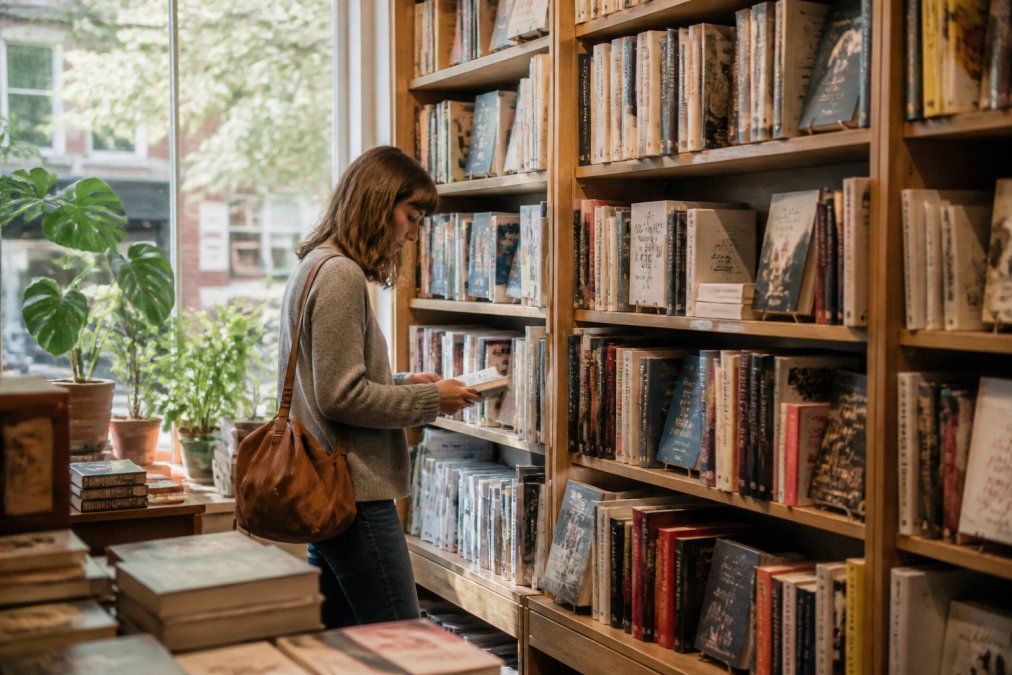
A well-curated bookshop becomes cultural infrastructure. Rather than presenting millions of titles and creating choice paralysis, independent bookshops reduce selection to what's genuinely worth reading. This curation serves bibliodiversity, the principle that literary ecosystems thrive when diverse voices and independent publishers receive shelf space alongside established names.
Independent bookshops typically stock a higher proportion of titles from small presses, regional authors, and independent publishers. For readers interested in British folklore, cosy mysteries, and niche historical narratives, this matters enormously. You'll find books that major retailers have never heard of, titles that would never appear in bestseller lists, and works by authors whose original storytelling deserves discovery by readers who actively seek quality over popularity.
The curation also reflects regional interest. A bookshop in Cornwall stocks differently from one in Manchester. This geographic specificity means you're more likely to find books relevant to your local culture, history, and community. Walking through a bookshop, you encounter recommendations you didn't search for. You pick up a book because its cover intrigues you, notice it's shelved next to a complementary title. This serendipitous discovery generates unexpected reading experiences that algorithmic recommendations rarely replicate.
The Importance of Local Bookshops for Community and Economy
Independent bookshops function as genuine community infrastructure. They create physical gathering spaces where readers connect with authors, attend literary events, and build relationships with other book enthusiasts. This social infrastructure strengthens community bonds and supports local cultural identity.
The economic impact extends far beyond book sales. Independent bookshops generate local employment, contribute tax revenue to local councils, and distribute revenue directly within their communities. Staff members spend wages locally, bookshops purchase supplies from local vendors, and profits support other community initiatives.
Research from the Institute for Local Self-Reliance on local retail economics demonstrates that independent retailers generate substantially higher local economic multiplier effects than chain operations. When you spend £20 at an independent bookshop, approximately 48% of that revenue stays in the local economy through wages, local purchasing, and community reinvestment. The same £20 spent at Amazon generates minimal local economic activity.
This economic multiplier effect accumulates. Communities with thriving independent bookshops report stronger local tax bases, more vibrant high streets, and greater resilience during economic downturns. Bookshops anchor retail districts, draw foot traffic that benefits neighbouring businesses, and create reasons for people to visit town centres rather than shopping exclusively online.
Independent bookshops also support local publishing ecosystems by stocking books from regional publishers, hosting author events for local writers, and providing platforms for voices that major retailers marginalise. Beyond economics, they serve as cultural institutions hosting book clubs, author talks, children's story times, and literary discussions that create community gathering spaces and strengthen social bonds.
Ethical Book Buying: A Guide to Supporting Independent Retailers
Ethical consumption means understanding where your money flows and what consequences follow from your purchasing decisions. When you choose independent bookshops over Amazon, you're making an explicit ethical statement about which business models you support.
Independent bookshops typically source through established book distributors and directly from publishers. You can trace where your purchase goes: to the publisher who paid the author, to the distributor who employed warehouse staff, to the bookshop owner and employees who provided the service. Amazon's supply chain obscures these connections behind algorithmic pricing and opaque logistics networks.
Independent bookshops operate under different incentive structures than Amazon. Their survival depends on offering something Amazon cannot, creating incentives toward genuine customer service, community investment, and ethical labour practices. Bookshop owners typically have personal stakes in their communities and reputations that depend on ethical conduct.
The environmental dimension of ethical book buying often surprises people. Independent bookshops reduce the environmental footprint of shipping by allowing customers to collect books immediately rather than waiting for delivery. When customers visit a bookshop, they often purchase multiple items, reducing per-book shipping impacts. Additionally, independent bookshops typically stock fewer copies of each title, reducing overproduction and waste associated with unsold inventory.
Amazon's business model optimises for rapid delivery and accepts high return rates as a cost of doing business. Books returned to Amazon distribution centres often end up in landfills rather than being resold. The environmental footprint of rapid delivery infrastructure, multiple sorting centres, and frequent-flyer logistics networks significantly exceeds the impact of customers visiting a local bookshop.
Ethical book buying also means supporting independent authors and small publishers. Independent bookshops actively stock small-press publications and self-published works that deserve readership. By shopping at independent bookshops, you're directly supporting publishing diversity and ensuring readers encounter voices that major retailers would never promote.
Bookshop employees typically earn stable wages, work reasonable hours, and develop genuine expertise in their field. They receive training in literary knowledge, customer service, and community engagement. This contrasts with Amazon warehouse workers, whose employment conditions have generated ongoing criticism from labour advocates and regulatory bodies across the UK and Europe.
Bookshop.org UK Review: A Direct Alternative to Amazon
For readers who value independent bookshops but appreciate online convenience, Bookshop.org UK provides a direct alternative that preserves the benefits of independent retail while offering digital accessibility. The platform functions as a marketplace connecting independent bookshops with online customers, allowing you to order books through a digital interface while supporting local retailers.
Bookshop.org UK operates on a fundamentally different model than Amazon. Rather than concentrating inventory and logistics, the platform connects customers with participating independent bookshops. When you place an order, Bookshop.org routes it to a nearby independent retailer who fulfils the order. This preserves the economic benefits of independent retail whilst providing the convenience of online ordering.
The platform's design reflects genuine commitment to independent retail. Bookshop.org takes a smaller commission than Amazon requires from third-party sellers, allowing independent bookshops to offer competitive pricing whilst maintaining healthy margins. The company is structured as a public benefit corporation, meaning it legally prioritises community benefit alongside profitability.
For customers, Bookshop.org UK offers advantages over Amazon. You can browse books with confidence that your purchase supports a real bookshop. The platform provides detailed book information, customer reviews, and curated lists created by independent booksellers. You gain the convenience of online shopping without sacrificing the ethical benefits of supporting independent retail.
The platform also enables book discovery through independent booksellers' recommendations rather than algorithmic suggestions based on purchase history. You encounter recommendations from bookshop staff who have genuine expertise in their field, creating discovery experiences closer to visiting a physical bookshop than browsing Amazon's algorithmic recommendations.
However, Bookshop.org UK represents a compromise. It provides digital convenience at the cost of the serendipitous discovery and community connection that physical bookshops offer. You miss the experience of browsing shelves, encountering unexpected titles, and having conversations with knowledgeable staff.
Personalized Service and Human Recommendation You Won't Get Online
The difference between algorithmic recommendations and human curation becomes starkly apparent when you seek book recommendations. An algorithm can predict what you might buy based on statistical patterns. A knowledgeable bookshop staff member can understand what you're actually seeking and guide you toward books that genuinely match your interests.

This distinction matters profoundly for readers with specific interests. If you're seeking British cosy mysteries with authentic period detail, folklore collections reflecting genuine scholarly research, or children's stories that engage without condescension, a bookshop staff member can guide you toward titles with precision that algorithms cannot replicate.
Bookshop staff develop genuine expertise through reading, customer interaction, and professional development. They understand literary genres, author styles, and thematic connections in ways requiring human judgment. When you describe what you're seeking, they offer recommendations based on intuitive understanding of literary merit and audience fit rather than purely statistical correlation.
This personal service creates ongoing relationships between bookshops and their customers. Regular visitors develop trusted relationships with staff members who understand their reading preferences and can anticipate recommendations. This relationship-based service generates loyalty and satisfaction that transactional online shopping cannot match.
The service extends beyond recommendations. Bookshop staff can discuss books with customers, provide context about authors and historical periods, help readers navigate challenging genres, order specific titles not in stock, and create curated collections around particular themes. For parents seeking age-appropriate children's books, this expertise becomes especially valuable, saving time and ensuring selections genuinely match children's interests and developmental stages.
How Independent Bookshops Are Adapting: Digital Integration and Accessibility
Modern independent bookshops have successfully integrated digital tools without sacrificing what makes them distinctive. Rather than competing with Amazon on speed and price, forward-thinking bookshops are using digital platforms to enhance their core strengths: curation, community, and personalised service.
Many independent bookshops now maintain active social media presence, curated email newsletters, and online catalogues that showcase their selection. These digital tools extend their reach beyond customers who can physically visit, allowing remote readers to access their recommendations and order books online. Importantly, these digital efforts remain grounded in human curation rather than algorithmic optimisation.
Some bookshops have developed subscription services offering monthly curated book selections, combining convenience of regular delivery with human curation that algorithms cannot replicate. Accessibility improvements have made independent bookshops more inclusive. Many now offer online ordering with in-store collection, serving customers who face mobility challenges or time constraints. Some have developed audiobook lending services, expanded children's sections with accessible formats, and created inclusive community events welcoming readers with diverse needs.
The integration of e-books and audiobooks into independent bookshop ecosystems represents another adaptation. Rather than ceding digital formats to Amazon, some bookshops now partner with platforms that allow them to sell digital books whilst retaining customer relationships and supporting author compensation fairly.
These adaptations demonstrate that independent bookshops aren't relics of the pre-digital era. They're evolving businesses finding ways to serve modern customers whilst preserving the human judgment and community focus that distinguish them from purely algorithmic retailers.
Conclusion: The Long-Term Value of Independent Bookshops
Choosing independent bookshops over Amazon represents more than a consumer preference, it's a decision about what kind of literary culture you want to support. Independent bookshops sustain bibliodiversity, generate local economic multiplier effects, provide genuine human curation, and create community infrastructure that purely online retailers cannot replicate.
The convenience argument for Amazon is real but incomplete. One-click purchasing and next-day delivery offer genuine benefits, but these conveniences come at costs deserving careful consideration: concentration of economic power in distant corporations, algorithmic curation that narrows literary discovery, environmental impacts of rapid-delivery infrastructure, and erosion of community gathering spaces.
Robs Books embodies what independent retail can offer: curated selection reflecting genuine editorial judgment, access to unique voices and emerging authors, and community-focused service that treats reading as a cultural practice rather than a transaction. When you choose independent bookshops, you're investing in the kind of literary culture that sustains authors, supports diverse voices, and strengthens communities.
Frequently Asked Questions
Why should I buy from independent bookshops instead of Amazon?
Independent bookshops offer curated selection tailored to your interests, direct human recommendation, and support for local authors and regional publishing. When you buy from independent bookshops, your money stays in your local economy rather than flowing to a corporate monopoly. You also gain access to exclusive editions, pre-order incentives, and a genuine community hub where book culture thrives, something Amazon's algorithm cannot replicate.
How do independent bookshops contribute to the local UK economy?
Independent bookshops generate local tax revenue, employ community members, and create a multiplier effect: staff spend wages locally, suppliers benefit from orders, and the bookshop itself becomes a gathering space that attracts foot traffic to surrounding businesses. Research shows independent retailers distribute profits more widely across their communities than large corporations, strengthening the long-term economic health of high streets and town centres.
Is Bookshop.org a better alternative to Amazon for UK readers?
Bookshop.org UK connects readers with independent bookshops across Britain, offering digital convenience without sacrificing ethical consumption. You get competitive delivery speeds, e-books and audiobooks alongside physical copies, and the knowledge that your purchase supports real bookshops rather than a corporate monopoly. It bridges the gap between Amazon's convenience and independent retail's values, making it a practical choice for readers who want both speed and community impact.
What makes independent bookshops more ethical than Amazon?
Independent bookshops prioritise bibliodiversity, stocking niche genres and independent publishing that Amazon marginalises. They practice transparent supply chains, support regional authors, and avoid the exploitative labour practices associated with large retailers. Buying from independent bookshops means your money funds fair wages, sustainable business practices, and cultural diversity rather than contributing to market monopolies that squeeze small publishers and authors.
This article was written using GrandRanker
0 comments